Dyscalculia
Online dyscalculia tutors for making sense of maths
Find online Maths tutors with experience supporting learners with dyscalculia, from number sense and fractions to more confident GCSE revision.
Maths can be frustrating when numbers do not seem to fall into place, even when a learner is working hard. Comparing quantities, remembering number facts or making sense of fractions may take extra time. A patient tutor can start with what your child already understands, then use diagrams, practical examples and regular practice to help ideas click. Explore tutors with dyscalculia experience and use the free introduction to discuss your child’s starting point and goals.
- 21 dyscalculia tutors to choose from
- £15–£70 per hour
- 5/5 average from 5 reviews of these tutors
- Free 15-minute introduction
Find Maths tutors with dyscalculia experience




- Farzana AADHD/ADDDyslexiaAutism£43/hr
- Rob G5.0AutismADHD/ADDDyscalculia£40/hr
- Andrew W5.0AutismDyslexiaDyscalculia£60/hr
Beyond memorising the answer: rebuilding number understanding
Some learners can repeat a procedure but are unsure what the numbers mean. They may struggle to judge which amount is larger, place a value on a number line, estimate an answer or connect a fraction with part of a whole. A tutor can slow the pace and make the relationship visible rather than pushing immediately to timed worksheets.
A useful pathway is concrete → visual → symbolic. For example, the learner first explores fraction pieces or counters, then draws a number line or diagram, then connects the picture to written numbers and operations. The tutor checks whether the meaning is secure at each stage rather than assuming a correct answer means the concept is understood.
Dyscalculia is a specific learning difficulty involving number processing; maths difficulties can also arise from gaps in teaching, language demands, working memory or anxiety. A tutor can help with learning either way, but should not claim to diagnose dyscalculia.
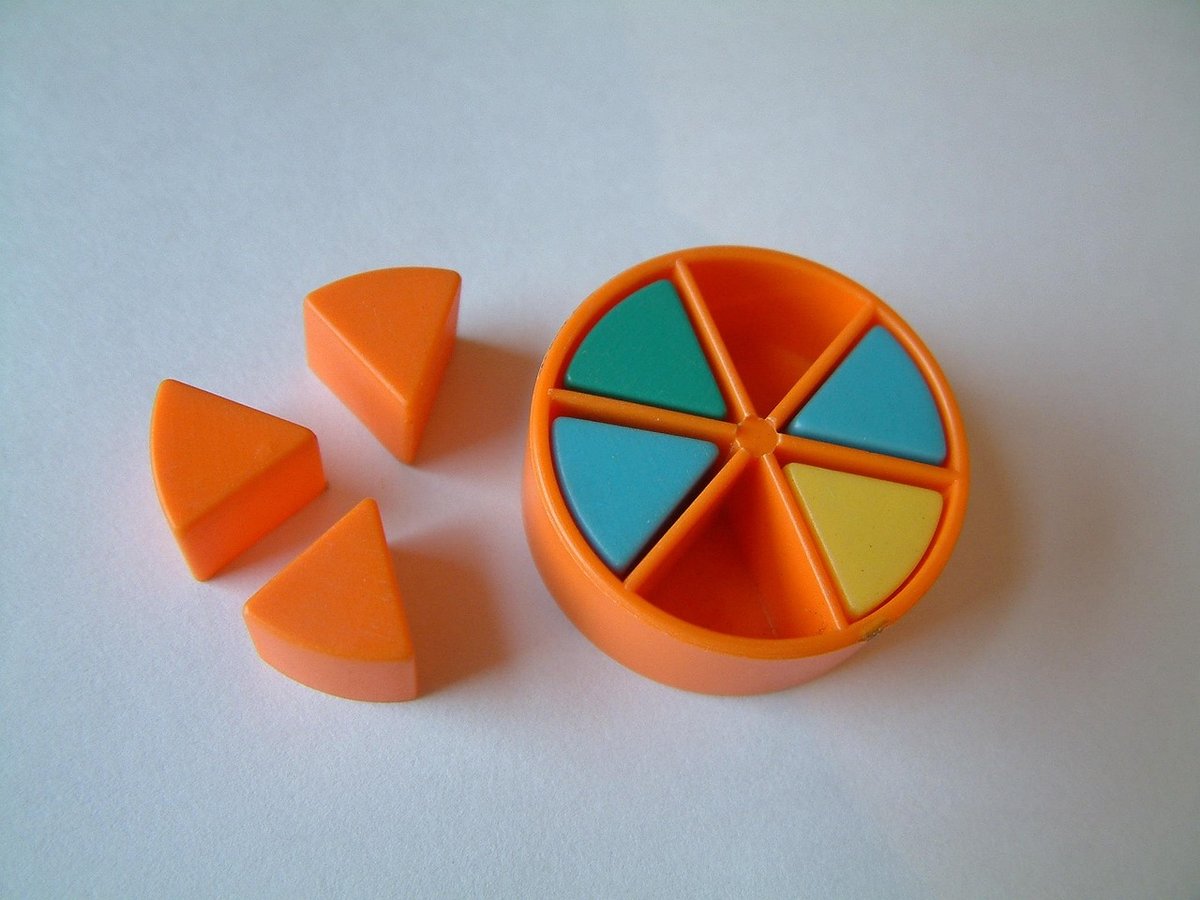
Ways a dyscalculia-aware Maths lesson may look different
See the quantity
Use counters, fraction pieces or dot patterns to explore what a number represents before writing symbols.
Place it on a number line
Help the learner compare size, order, distance and position rather than recite facts alone.
Explain one connection
Link a new idea to a known one, such as 1/2, 0.5 and 50%, before adding more examples.
Use deliberate practice
Repeat a small number of meaningful examples with feedback instead of rushing through a long set.
Check estimation
Ask whether an answer is sensible before calculating exactly; explain why when it is not.
Protect confidence
Allow thinking time and discuss mistakes as clues to the concept that needs more work.
Find Maths tutors with dyscalculia experience
Explore tutors who understand the challenges that dyscalculia can bring to Maths learning, and see which levels they teach.
5/5 from 5 reviews— Average rating of these tutors across all their Klasu reviews
- FA£43/hr
Farzana A
Qualified Teacher & Edexcel Examiner | Tutor | Exam Technique
Qualified teacherExaminerDBS checkedSEN experience20+ years experienceView profile & availabilityNext available: Tomorrow 3:30pm
Contacted by 2 families this month
Usually replies within 17 minutes
- RG£40/hr
Rob G
5.0(1)Former Teacher | 15,000+ Hours of Tuition & 18+ Years’ Experience
DBS checkedSEN experience18+ years experienceView profile & availabilityNext available: Tomorrow 10:00am
Contacted by 2 families this month
Usually replies within 2 hours
- AW£60/hr
Andrew W
5.0(1)Qualified Tutor | 26 Years’ Experience & Head of Department Leadership
Qualified teacherDBS checkedSEN experience26+ years experienceView profile & availabilityUsually replies within 55 minutes
- CW£20/hr
Claire W
Qualified Teacher | Tutor | 12+ Years Making Learning Enjoyable
Qualified teacherDBS checkedSEN experience12+ years experienceView profile & availability - GA£40/hr
Gladys A
Economics Graduate & Multi-Subject Tutor | 7+ Years Helping Students Succeed
DBS checkedSEN experience7+ years experienceView profile & availability - HA
 £40/hr
Hassan A
Qualified Teacher & SEN Specialist | Master the Concepts, Build Real Confidence
Qualified teacherDBS checkedSEN experienceView profile & availability - NR
 £30/hr
Nick R
Former Headteacher with SEND Expertise | Personalised Support That Builds Confidence
Qualified teacherDBS checkedSEN experience17+ years experienceView profile & availability - AD
 £70/hr
Arun D
Senior Mathematics Practitioner | Tutor | Edexcel Examiner
Qualified teacherExaminerSEN experience14+ years experienceView profile & availability - CK
 £35/hr
Charlotte K
Former Headteacher | Tutor | 27+ Years Building Confidence & Success
DBS checkedSEN experience27+ years experienceView profile & availability - HC
 £65/hr
Hayley C
Qualified Science Teacher & PhD | Tutor | Building Exam Confidence
Qualified teacherDBS checkedSEN experience26+ years experienceView profile & availability - EP
 £25/hr
Eleanor P
Qualified Teacher | Tutor | Confidence and Exam Skills
Qualified teacherExaminerDBS checkedSEN experience6+ years experienceView profile & availabilityNext available: Tomorrow 5:00pm
Contacted by 3 families this month
Usually replies within 9 minutes
- ST
 £50/hr
Samia T
5.0(1)Qualified Teacher | Tutor | 22+ Years in Mathematics Education
Qualified teacherSEN experience22+ years experienceView profile & availabilityNext available: Tomorrow 9:00am
Signs your child is gaining confidence with numbers
- Recognising which of two quantities is greater without relying only on counting each item.
- Explaining where a number or fraction belongs on a number line.
- Linking one visual model to more than one numerical representation.
- Using an estimation check to notice when an answer seems unreasonable.
- Choosing a strategy for a familiar calculation rather than guessing which operation is required.
- Approaching a short Maths task with less avoidance and more willingness to explain thinking.
From foundation number sense to GCSE Maths
| Topic | An accessible starting point to explore |
|---|---|
| Counting and quantity | Compare dot groups or counters before introducing numeral symbols. |
| Place value | Use a place-value chart or base-ten blocks to make tens and hundreds visible. |
| Addition and subtraction | Show movement and difference on a number line, then connect it to written methods. |
| Fractions and percentages | Build fractions with pieces or diagrams, then connect the image to 1/2, 0.5 and 50%. |
| Ratio and proportion | Use picture bars or simple real-world comparisons before formal notation. |
| Algebra and GCSE questions | Work from concrete patterns towards symbols, with one interpretation step at a time. |
What to prioritise when GCSE Maths is approaching
Start with the exam board, tier and next assessment date, but do not build a plan solely from the number of papers left. If place value or fractions are insecure, repeated exam-question drilling may produce frustration without lasting understanding. A tutor can map the high-impact gaps, revisit them visually and then reintroduce relevant past-paper questions in manageable groups.
An accessible exam-practice routine might be: read the question, highlight the key quantity, sketch a diagram, choose a method, complete one calculation and sense-check the result. Time pressure can be introduced gradually if appropriate. For access arrangements, ask the school or exam centre rather than relying on a private tutor’s opinion.
Maths anxiety and dyscalculia are not the same thing
A learner may have persistent number-sense difficulties, anxiety about Maths, gaps in earlier teaching—or several of these together. A tutor should explore what the learner understands without using a lesson as a diagnosis. Success may begin with explaining one visual model confidently, not answering more questions against the clock.
An example: learning to understand fractions
Discover the starting point
Ask what a half means using familiar objects rather than assuming the learner remembers a rule.
Build and compare
Use real or virtual fraction pieces to make one whole, two halves and four quarters.
Draw the model
Transfer the same relationship to a bar or circle, then place values on a number line.
Connect to symbols
Relate 1/2 to 2/4, decimals and percentages when the visual relationship is clear.
Apply and revisit
Use one real context, check understanding later and avoid rushing to the next topic.
Dyscalculia and Maths tutoring by level
Explore Maths tuition by qualification, including GCSE support where relevant tutors and pages are available.
KS2 Maths
KS3 Maths
GCSE Maths
GCSE Physics
IGCSE Maths
A-Level Maths
What to ask a dyscalculia-experienced Maths tutor
- How would you find out whether the difficulty is with quantity, place value, facts, word problems or something else?
- Can you show how you would teach a fraction or negative number using a visual model?
- How do you check that understanding is secure before moving to a GCSE exam technique?
- What would you do if timed questions increase anxiety?
- Do you teach the relevant Maths syllabus and tier, not just early number work?
- How would you explain progress to us without judging it only by speed?
Meet a Maths tutor and talk through the sticking points
Tutor profiles show experience supporting learners with dyscalculia, as well as the Maths levels each tutor teaches. Every Klasu tutor completes our verification process before teaching on the platform. During the free 15-minute introduction, explain which topics your child finds tricky, what they've tried already and any approaches that have helped. Ask how the tutor would use visual examples, revisit foundations and build towards the next school or exam topic.
Useful guidance from trusted organisations
British Dyslexia Association – dyscalculia
Information about dyscalculia and persistent Maths difficulties.
OpenBDA – 2025 definition of a Maths learning difficulty
Current specialist definition and discussion of overlapping learning needs.
OpenNational Numeracy
Independent resources for numeracy confidence and everyday Maths.
OpenOther learning needs
Some children benefit from support in more than one area. Browse our other guides to find out what might help.
- 48 tutorsAutismPredictable lesson structure, clear and literal explanations and a calm pace that respects sensory needs.Read the Autism guide
- 46 tutorsADHD/ADDShort, varied activities, visible goals and help with organisation, homework and revision.Read the ADHD/ADD guide
- 45 tutorsDyslexiaStructured, multi-sensory teaching for reading, spelling and writing, with accessible materials.Read the Dyslexia guide
- 33 tutorsSEMH (Social, Emotional & Mental Health)A steady, trusted tutor and a gentle pace that help learners rebuild confidence and re-engage.Read the SEMH guide
- 15 tutorsDyspraxiaInstructions one step at a time, less handwriting and practical organisation strategies.Read the Dyspraxia guide
Helpful reading for families
Read practical advice on study skills, confidence and getting the most from one-to-one tuition.
10 July 2026First Tutors Has Closed: What Parents and Tutors Can Do NextAfter more than 20 years of connecting families with private educators across the UK, First Tutors officially closed its doors on 8 May 2026. The sudden shutdown left thousands of parents, students, and independent tutors wondering how to manage ongoing lessons, recover lost profile reviews, and find a reliable replacement.
 11 May 2026What is the 11 plus exam?What is the 11 plus? The 11 plus is a selective secondary school entrance examination, used by state-funded grammar schools and many selective private schools, to identify the most academically...
5 May 2026How to prepare for the 8+ examIf your child is due to take their eight plus (8+) exam, you may have already found there is limited information available. This guide aims to provide all of the useful information you need in one place, to help you prepare your child for this important entrance exam.
Frequently asked questions
Can dyscalculia tutoring help with GCSE Maths?
Yes. Look for a GCSE Maths tutor with dyscalculia experience who can strengthen number foundations while covering the topics your child needs for their exam board and tier. Agree achievable goals and review progress together.
Is dyscalculia just being weak at arithmetic?
No. Dyscalculia refers to a specific persistent difficulty with numerical processing. Maths difficulties can also have other causes, including missed learning and anxiety. Educational tutoring does not replace a formal assessment.
Why use counters, shapes and number lines for an older student?
Visual models are not just for young children. They can make ratio, place value, negative numbers and fractions understandable before symbols and algebra become the focus.
How are dyscalculia and maths anxiety different?
Dyscalculia concerns persistent difficulties with number processing. Maths anxiety is an emotional response to Maths that can occur with or without dyscalculia. Both deserve a patient, non-judgemental teaching approach.
Can an online tutor use physical maths resources?
A learner may use everyday objects at home while the tutor uses diagrams or virtual manipulatives on screen. Agree the practical setup in advance.
Does my child need a diagnosis before starting lessons?
No. You can discuss the mathematical challenges you notice and the methods that have helped. Tutors do not diagnose dyscalculia.
Will a dyscalculia tutor only teach counting?
No. Look for a tutor with subject knowledge at the correct level. They may revisit basic number concepts only where this genuinely supports later curriculum topics.
Can I get extra time in Maths exams because of dyscalculia?
Access arrangements are managed by the school or exam centre under the current rules and evidence requirements. A diagnosis does not automatically confer extra time; raise questions with the school SENCO or exams officer.
Find a Maths tutor who explains things clearly
Find a Maths tutor with dyscalculia experience and talk through the topics your child wants to understand better in a free introduction.