Edexcel GCSE Maths Tutors Online
Give every practice session a clearer purpose.
- Verified tutors
- Free 15-minute introduction
- Edexcel experience
Verified tutors
ID + reference checked
Free 15-minute introduction
Meet your tutor and discuss your goals.
Edexcel experience
Tutors who teach your exam board.
Edexcel GCSE Maths tutors
View all 31 Edexcel GCSE Maths tutors £25/hr
Faizan S
GCSE Maths Tutor | Fun Lessons to Build Confidence & Improve Grades
Next available: Today 5:00pm
 £70/hr
Richard K
Enthusiastic and Expert Maths Tutor
Next available: Tomorrow 8:00pm
 £55/hr
Antony N
Former Head of Secondary & Maths Examiner | 15+ Years Building Confidence in Maths & Stronger Results
Next available: Today 5:00pm
 £45/hr
Irina M
Curious, Enthusiastic and Passionate Maths
Usually replies within 6 minutes
 £25/hr
Charlie W
Second-Year Medical Student | GCSE & A-Level Maths Tutor | Build Confidence & Exam Skills
Next available: Today 5:00pm
Usually replies within 3 minutes
 £40/hr
Rob G
Highly experienced, enthusiastic and adaptable Maths tutor
Next available: Tomorrow 9:00am
 £35/hr
Tayyaba H
Where understanding adds up. An experienced Maths tutor turning potential into top grades.
Next available: Tue 6:00pm
Contacted by 2 families this month
Usually replies within 2 hours
 £25/hr
Komal A
Qualified and Supportive Maths Tutor
 £67/hr
Michelle N
Expert Maths Tutor & Curriculum Specialist
Next available: Today 5:00pm
 £55/hr
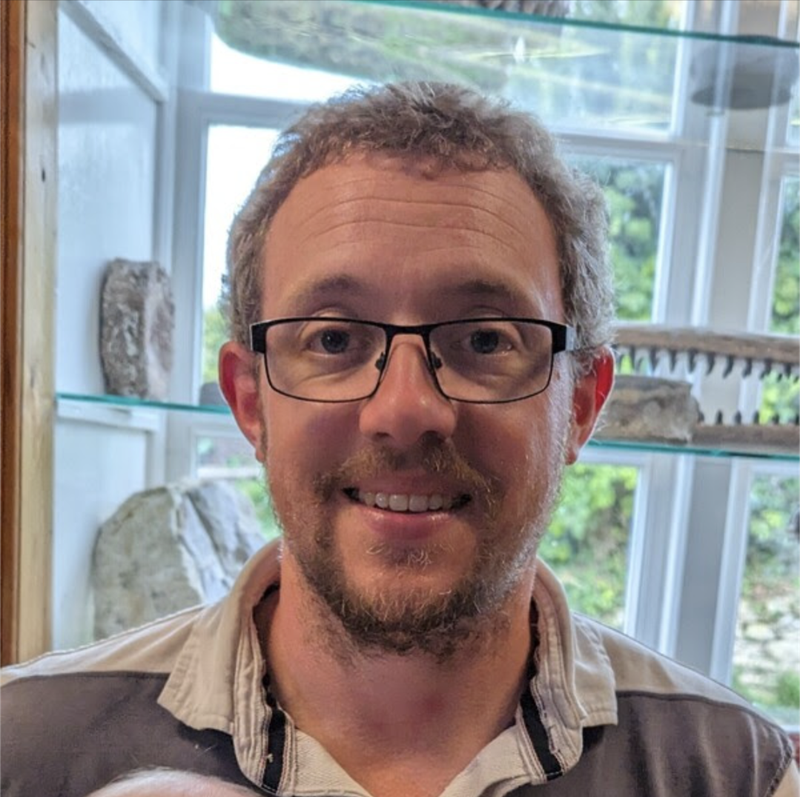
Arun D
Senior Lead Mathematics Practitioner | Expert Maths Tutor | Edexcel Examiner for A Level & GCSE
 £30/hr
Tom D
Experienced, qualified Maths teacher
 £50/hr
Andrew V
Accessible, Engaging and Effective Maths Tutor
 £43/hr
Nausha P
Leading with Insight, Teaching with Impact in Maths Because Every Mind Deserves to Shine
 £30/hr
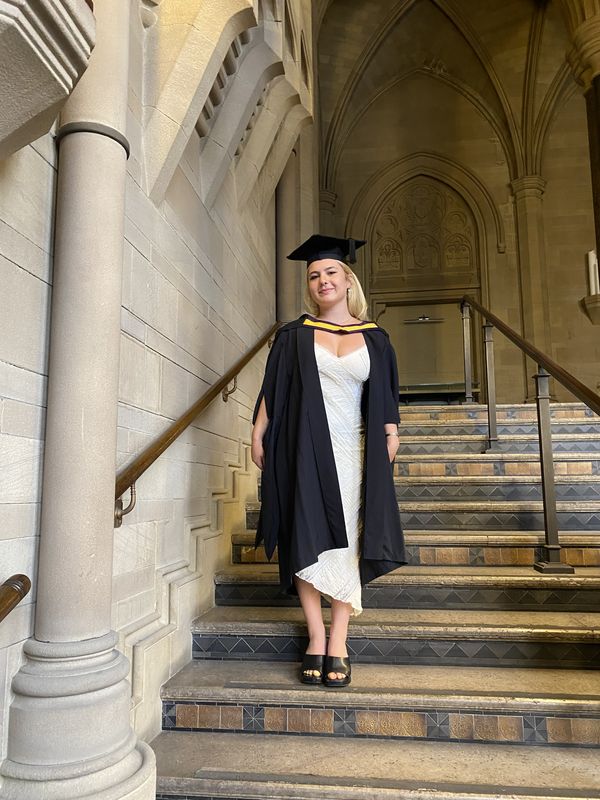
Ethan S
GCSE, KS3 and A-Level Maths Tutor | 100% in GCSE Maths | UCL Student | 11 Grade 9s
 £40/hr
Sophie F
Experienced and engaging Maths Tutor | Boost your grades and confidence!
 £20/hr
Will S
Warwick Maths Student | Teaching STEM | Maths Tutor
Contacted by 2 families this month
Usually replies within 31 minutes
 £45/hr
Dara M
Positive and experienced Maths specialist tutor
 £25/hr
Noor-Fatima K
Experienced GCSE Maths Tutor | Clear Explanations & Exam-Focused Support
Next available: Today 5:00pm
Contacted by 2 families this month
 £50/hr
Akanksha J
Experienced, Enthusiastic, Empathetic Maths Tutor
Usually replies within 11 minutes
 £30/hr
Anya A
Patient Law Student | Tailored Maths Tuition | Help your child grow and develop
 £44/hr
Charlotte A
Highly experienced Maths tutor who is able to adapt and personalise learning targeted to your needs
 £22.5/hr
Alexander H
Friendly and Supportive Maths Tutor
Contacted by 3 families this month
 £20/hr
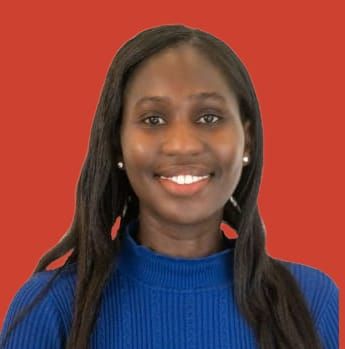
Maawish B
Enthusiastic, Engaging and Experienced Maths Tutor
 £30/hr
Boatemaa O
Student Centred Maths Tutor
About Edexcel GCSE Maths
Your next step is hidden in the work you have already done
A mock result gives you a number. Looking closely at the answers can give you a direction. Did you know the topic but choose the wrong method? Miss a unit? Get through the first stage and lose track of the next? Each points towards a different kind of practice.
One-to-one tuition gives you time to investigate those patterns. Instead of repeatedly completing whole papers without knowing what to change, you can work on a specific skill, try it again and see whether the difficulty returns.
Klasu brings together tutors who list Edexcel GCSE Maths in their offerings. Compare teaching approaches and current rates, then use a free introduction to discuss your course, target topics and recent work.
Turn a lost mark into a useful next step
| What your work shows | What to explore with a tutor | A focused practice task |
|---|---|---|
| You could not choose a starting method | How to recognise the information and the goal | Sort a few questions by possible first steps, then explain your choices. |
| The method was sensible but the answer went wrong | Signs, fractions, arithmetic or calculator entry | Work through a short set carefully and identify the exact line where an error occurs. |
| You answered a different question | Wording, units and what the final answer represents | Summarise what each question asks before calculating. |
| You ran out of time | Fluency, question selection and checking habits | Try a short timed section after the methods are secure, then review the decisions you made. |
Use mistakes as information
Keep a short record of the error, the correction and a new question that tests the same idea. Returning to that question later tells you more than rereading a worked answer you already recognise.
Edexcel GCSE Maths 1MA1 at a glance
| Paper | Calculator use | Time | Marks |
|---|---|---|---|
| 1F or 1H | Non-calculator | 90 minutes | 80 |
| 2F or 2H | Calculator allowed | 90 minutes | 80 |
| 3F or 3H | Calculator allowed | 90 minutes | 80 |
Edexcel: using the paper overview
There are 240 marks across the three papers, each worth one-third of the qualification. All three are taken at the same tier in the same exam series. The assessment is exam-based; there is no coursework component.
Source: Edexcel specification. The standard duration is shown; approved access arrangements may affect an individual candidate’s timetable.
Edexcel GCSE Maths: build a practical revision plan
Start
Identify what needs attention
Bring a recent assessment and choose a few questions that reveal gaps in understanding or method.
Practise
Mix calculator and non-calculator work
Use questions matching your tier. Revisit mistakes, explain the method and try a similar question independently.
Prepare
Plan around your confirmed timetable
Check each paper’s date with your school or exam centre. Balance preparation across the papers and leave time to review recurring errors.
Confirm your timetable before planning revision
Use the Edexcel exam timetables to find the dates for your qualification and exam series. Your school or exam centre will confirm your individual arrangements and when you need to arrive.
Check any contingency arrangements for your series before booking travel. Share the confirmed paper dates with your tutor so revision can be planned around the assessments you are actually taking.
Check the qualification before choosing your practice
This page is for Pearson Edexcel GCSE Mathematics 1MA1. The three equally weighted papers are taken at the same tier: Foundation or Higher. Share your tier and course details with the tutor so your practice matches your entry.
Edexcel International GCSE is a separate qualification. If your school says “IGCSE”, check the exact course before choosing materials or assuming a GCSE profile covers it. A tutor’s familiarity with your actual qualification matters more than the board name alone.
Foundation or Higher: discuss the right Edexcel preparation
Foundation: grades 1–5
Develop secure methods and apply them in a range of questions. Aiming for a grade 4 or 5 still calls for reasoning, careful interpretation and problem-solving, not only routine calculations.
Higher: grades 4–9, with a grade 3 safety net
Prepare for more demanding content and connections between topics. Entry should reflect the learner’s current work and school guidance, not an assumption that Higher is automatically the better choice.
Edexcel topic weighting: the published ranges
| Topic area | Foundation range | Higher range |
|---|---|---|
| Number | 22–28% | 12–18% |
| Algebra | 17–23% | 27–33% |
| Ratio, proportion and rates of change | 22–28% | 17–23% |
| Geometry and measures | 12–18% | 17–23% |
| Statistics and probability combined | 12–18% | 12–18% |
Read these ranges as guidance, not predictions
The ranges come from Pearson’s GCSE Maths specification. They allow variation across an assessment; the lower or upper endpoints are not meant to add up to 100%.
Use them to check the balance of your revision rather than to rule topics out. After identifying a gap, practise the idea on its own and in a mixed question where you must decide whether it is relevant.
What the marks reward across the qualification
| Skill area | Foundation | Higher |
|---|---|---|
| AO1: carrying out mathematical techniques | 50% | 40% |
| AO2: reasoning and explaining | 25% | 30% |
| AO3: solving problems | 25% | 30% |
A correct method is only part of the preparation
Practise three kinds of conversation: “How do I carry this out?”, “Why does it work?” and “How do I decide what to do here?” A learner may be confident with the first and still need help with the other two.
The percentages are overall assessment-objective weightings, not a question-by-question forecast. AQA’s assessment scheme explains the shared objectives; Pearson’s specification confirms them for Edexcel. These are separate from topic weightings: they describe the kind of thinking being assessed.
Build a plan around your stage of study
Establish dependable methods
If the essentials feel inconsistent, focus on a small set of connected skills. Explain each step, practise accurately and return to the idea after a gap.
Prepare for mocks
Use classwork and previous assessments to choose priorities. Mix topic practice with suitable paper sections, then make time to act on the feedback.
Stretch towards more demanding problems
Discuss questions that combine ideas, require proof or ask you to justify a conclusion. Work on choosing a route, communicating it and checking whether it makes sense.
Approach a resit with a fresh plan
Review the previous attempt without simply repeating the same revision routine. Identify what needs to change and confirm your course and exam entry with your centre.
Formula sheets in Edexcel GCSE Maths
Find the official exam aids through Pearson’s GCSE Maths qualification page. Confirm the formula-sheet arrangements for your tier and exam series with school, then use the appropriate version during practice.
A formula sheet is useful when you can connect it to the problem. Practise deciding what each symbol represents, replacing it with the correct value and checking whether a length, area or volume unit is needed. A supplied formula does not remove the need for algebra or reasoning.
Original practice: a discount is more than a calculator entry
| Step | Working | What to notice |
|---|---|---|
| Question | A £60 jacket is reduced by 15%. Find the sale price. | The final answer is the reduced price, not the saving. |
| Find the reduction | 10% of £60 = £6; 5% = £3; 15% = £9. | Breaking up the percentage gives a way to check the result. |
| Find the price | £60 − £9 = £51. | Return to what the question actually asks. |
| Try a second method | £60 × 0.85 = £51. | Explain why 85% of the original price remains. |
Visual model: reverse a 20% reduction
| Original amount | Fraction remaining | Sale price |
|---|---|---|
| 100% | 80% = 0.8 | £48 |
| Find 100% | £48 ÷ 0.8 | £60 |
Reverse the multiplier, not the percentage
Adding 20% of £48 gives £57.60, not the original £60. The reduction was calculated from the original amount. A tutor can compare the forward and reverse calculations so the choice of method is understood.
Visual model: organise probability outcomes
Two fair coins are tossed independently. In this original sample-space diagram, rows show the first coin and columns show the second. H means heads and T means tails. Each cell is one equally likely ordered outcome.
Two-coin sample-space diagram
| First coin / second coin | H | T |
|---|---|---|
| H | HH | HT |
| T | TH | TT |
Count outcomes before counting probabilities
Exactly one head occurs in HT or TH: two of four outcomes, so the probability is 1/2. Two heads has probability 1/4. Explaining why the cells are equally likely matters; do not assume every list of outcomes has that property.
Visual model: a two-way table
| Group | Walk | Bus | Total |
|---|---|---|---|
| Year 10 | 12 | 8 | 20 |
| Year 11 | 9 | 11 | 20 |
| Total | 21 | 19 | 40 |
Let the question decide the denominator
In this invented group, the probability that a randomly chosen student takes the bus is 19/40. If you choose only from Year 11, it is 11/20. The table is unchanged; the group being selected from is different.
Practise an exam routine before exam day
Find a pace you can sustain
Use short timed sections before attempting whole papers. Notice where time goes: reading, deciding, calculating or repeatedly checking. Discuss a sensible move-on strategy with your tutor.
Record enough working
Write the method and intermediate steps clearly. A final number alone gives less information about your thinking, particularly if an arithmetic slip has occurred.
Use the final minutes deliberately
Return to unfinished questions and check units, signs and rounding. Recalculate where useful, but also check whether you answered the original question.
A practical cycle for more purposeful revision
Review
Choose one priority
Look at a small sample of recent work with your tutor. Decide whether the next task is about understanding, accuracy, interpretation or pace.
Practise
Work on the precise difficulty
Use examples that make you think about the method. Ask questions and explain your decisions rather than only checking the final answer.
Transfer
Try a different context
Apply the same idea when the wording or presentation changes. This is where a familiar method can become a skill you choose independently.
Revisit
Check what has stayed with you
Return to the topic after a gap. Keep what works, adjust what does not and use the evidence to choose the next priority.
Grade boundaries: use past results carefully
Your final grade is based on your combined result across the papers. A difficult paper does not, by itself, decide the whole qualification. Keep preparing for the remaining assessments.
The marks needed for a grade can change between exam series. A previous boundary is a reference for that specific set of papers, not a guaranteed target for a future exam series. Use Edexcel published grade boundaries with matching practice papers and discuss progress using several pieces of work.
Frequently asked questions
Do I need to wait for a disappointing mock result to get a tutor?
No. You can seek help with a current topic, prepare for an upcoming assessment or develop stronger reasoning before a gap grows. Bring a clear example of what you would like to improve so the introduction has a useful focus.
Can we use my school’s marked Edexcel papers?
Discuss this with your tutor and share material you are permitted to use. Your own attempts and teacher feedback help show where the difficulty lies. Publicly released Edexcel practice materials can also support revision.
Does doing more past papers always improve results?
Completing a paper is only one part of practice. Reviewing mistakes, rebuilding an uncertain method and trying a fresh question are useful follow-up steps. Ask your tutor how they would balance topic work with timed practice for your current stage.
Can a tutor help me aim for a higher grade?
Discuss your current work and ambitions with the tutor. They can help identify suitable priorities and more demanding practice where appropriate. No grade is guaranteed, and changes to your exam tier must be agreed with your school or exam centre.
Is Edexcel GCSE the same as Edexcel International GCSE?
No. They are different qualifications. This page is for GCSE Maths; confirm the exact course and specification with your school and prospective tutor if you take International GCSE.
How do I choose between tutors with different prices?
Compare the current profile rates alongside relevant experience, teaching approach and availability. Use the introduction to ask how the tutor would work on one difficulty from your recent Maths work. That conversation can help you judge the fit.
What should I bring to the free introduction?
Your course and tier, one or two topics you find difficult, and a sense of your goals. The 15-minute introduction is for meeting the tutor and planning a possible first lesson, rather than a free lesson or full assessment.
What equipment should I prepare?
Ask your school or exam centre to confirm its current equipment list and that your calculator is permitted. Practise with the calculator you will use for the calculator papers. Be comfortable using a ruler, protractor and pair of compasses for appropriate tasks; follow the instructions on each paper.
Are the visual examples actual exam questions?
No. They are original learning examples to explain a method or representation. They are not predictions, reproduced exam questions or an indication that a particular topic will appear on your next paper.
Make your next hour of Maths count
You do not have to solve everything at once. Start by finding a tutor who can help you decide what to work on next and why. Explore the Edexcel GCSE Maths profiles above, compare availability and arrange a free 15-minute introduction.
Assessment reference: Pearson Edexcel GCSE Mathematics, checked 16 September 2026. Check current materials for your exam series. The discount example is original practice, not an Edexcel question.
Ready to find your tutor?
Book a free 15-minute introduction — meet your tutor and discuss your goals.