13+ Maths Tutors Online
13+ Maths tutor rates: £20–£70 per hour
The phrase '13+ Maths' covers a range of different assessments depending on the school your child is applying to. Some families are preparing for ISEB Common Entrance in Year 8, while others are dealing with an earlier Common Pre-Test in Year 6, a school-specific entrance paper, or a scholarship examination. Working with an experienced tutor can help you make sense of the process, identify exactly what your child needs to cover, and build the kind of confident, accurate Maths that entrance assessments reward. Klasu's online tutors work with pupils at every stage of 13+ preparation, from…
Top Maths tutors

Irina M
Curious, Enthusiastic and Passionate Maths
13+ Maths Tutor
From £45/hour
★ 5.0/5 from 1 review

Richard K
Enthusiastic and Expert Maths Tutor
13+ Maths Tutor
From £70/hour
★ 5.0/5 from 1 review
DBS Checked

Faizan S
GCSE Maths Tutor | Fun Lessons to Build Confidence & Improve Grades
13+ Maths Tutor
From £24/hour
★ 5.0/5 from 1 review
DBS Checked

Andrew V
Accessible, Engaging and Effective Maths Tutor
13+ Maths Tutor
From £50/hour
DBS Checked • SEN Specialist

Paul E
Experienced tutor with a strong Maths background.
13+ Maths Tutor
From £40/hour
DBS Checked • Qualified Teacher (QTS) • SEN Specialist

Arun D
Senior Lead Mathematics Practitioner | Expert Maths Tutor | Edexcel Examiner for A Level & GCSE
13+ Maths Tutor
From £55/hour
Qualified Teacher (QTS) • Examiner • SEN Specialist

Will S
Warwick Maths Student | Teaching STEM | Maths Tutor
13+ Maths Tutor
From £20/hour

Dara M
Positive and experienced Maths specialist tutor
13+ Maths Tutor
From £45/hour
DBS Checked

Samia T
Knowledgeable and highly rated Maths Tutor
13+ Maths Tutor
From £70/hour
★ 5.0/5 from 1 review
Qualified Teacher (QTS) • SEN Specialist
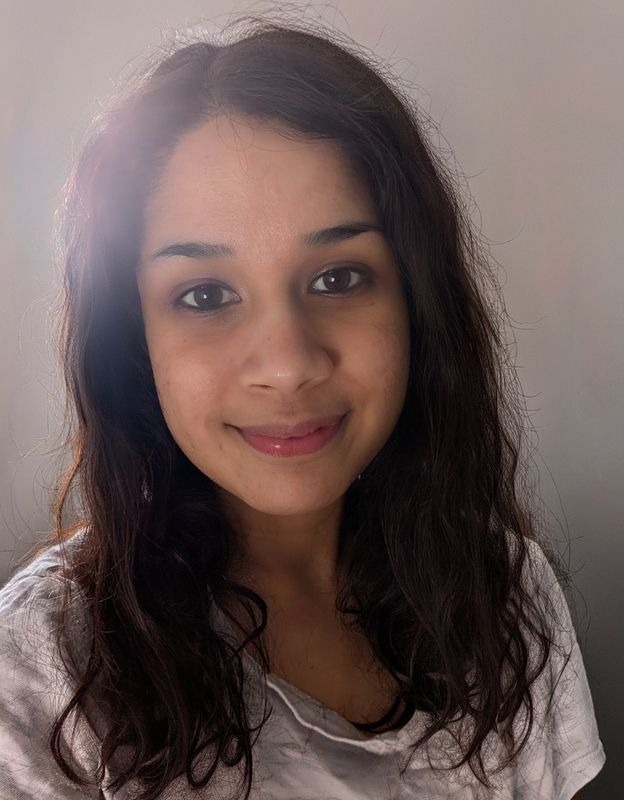
Akanksha J
Experienced, Enthusiastic, Empathetic Maths Tutor
13+ Maths Tutor
From £50/hour
DBS Checked • Examiner

Anya A
Patient Law Student | Tailored Maths Tuition | Help your child grow and develop
13+ Maths Tutor
From £25/hour
DBS Checked

Charlotte A
Highly experienced Maths tutor who is able to adapt and personalise learning targeted to your needs
13+ Maths Tutor
From £44/hour
★ 5.0/5 from 1 review
DBS Checked • Qualified Teacher (QTS) • SEN Specialist
Why choose Klasu
At Klasu, we connect students with expert Maths tutors to build understanding and confidence. Whether you're preparing for Maths exams or looking for extra support with your studies, our personalised online lessons help you achieve your goals.
Ace Your Maths Exams
Preparing for exams can be stressful and overwhelming. Klasu is here to help you master your Maths studies and feel confident on exam day.
Whether you're tackling GCSE Maths or A-Level Maths, we have the tools and expertise to help you succeed.
Explore our tuition services
Are you searching for a competent and dedicated Maths tutor for your child or perhaps to enhance your understanding and confidence in the subject? Our expert tutors are here to help you deepen your knowledge, ace exam preparation, and unlock your full potential in Maths. With private lessons online tailored to your schedule, we ensure a flexible and focused approach to learning. Take the first step toward boosting your confidence and improving your Maths grades today.
Finding the right 13+ Maths tutor can make all the difference in academic success. Klasu's online tutors specialise in 13+ Maths and plan personalised one-to-one lessons around your syllabus and target grade.
Whether you're preparing for 13+ Maths exams, need help with homework, or want to deepen your understanding, our tutors provide personalised one-to-one lessons tailored to your learning style and target grade.
Exam boards we cover
- ISEB (Independent Schools Examinations Board)
- ISEB provides the Common Entrance at 13+ Mathematics examinations taken by many prep-school pupils applying to independent senior schools. The current specification, introduced for teaching from September 2021, is designed to develop fluency, reasoning and problem-solving alongside secure procedural knowledge.
- ISEB Common Pre-Tests
- The ISEB Common Pre-Tests are separate from Common Entrance and are used by some senior schools as an earlier admissions stage, often taken during Year 6 for deferred Year 9 entry. The Mathematics section is online, adaptive and multiple-choice, with content broadly based on the National Curriculum through the end of Year 5.
- School-Specific Entrance Examinations
- A number of independent senior schools set their own 13+ Mathematics papers rather than, or in addition to, ISEB Common Entrance. These papers vary considerably in format, difficulty, calculator policy and the range of topics assessed, so preparation should always be based on the target school's own published information.
- ISEB CASE (Common Academic Scholarship Examination)
- CASE Mathematics is the ISEB scholarship assessment, based on the Core and Additional sections of the 13+ specification and intended to challenge academically strong candidates. It is a single 90-minute paper worth 100 marks, with a compulsory first section and a more demanding second section.
Topics covered
- Number and Arithmetic
- Students work with whole numbers, decimals, fractions, percentages and negative numbers. Key skills include prime factorisation, highest common factor, lowest common multiple, order of operations and accurate written arithmetic. Word problems require pupils to select the right method and interpret their answer in context.
- Algebra
- Core algebra covers collecting like terms, expanding brackets, substitution, forming and solving linear equations, and working with simple formulae. Students also interpret and draw straight-line graphs. Additional-level work extends into rearranging formulae, simultaneous equations, factorising by a variable and plotting non-linear curves.
- Ratio and Proportional Reasoning
- Students write, simplify and apply ratios, share quantities in a given ratio and use proportional relationships to solve real-world problems. Percentage increase and decrease, profit and loss, and speed, distance and time calculations all fall within this area.
- Measurement
- This topic covers metric units, time calculations, perimeter, area and volume. Students calculate areas of rectangles, triangles, parallelograms, trapezia and circles, and find the volume and surface area of cuboids, prisms and cylinders. Interpreting conversion graphs, travel graphs and scatter graphs is also included.
- Geometry
- Students apply angle facts including vertically opposite angles, angles on a straight line, alternate and corresponding angles, and interior and exterior angles of polygons. They also work with coordinates, transformations including translation, reflection, rotation and enlargement, and the properties of triangles and quadrilaterals.
- Mental Arithmetic
- The current ISEB Foundation and Core assessments include a ten-minute written mental arithmetic test worth 40 marks. Preparation focuses on number bonds, multiplication and division, fractions, percentages, ratio, estimation and place-value reasoning, as well as selecting efficient methods without relying on a calculator.
- Sequences and Patterns
- Students identify and continue arithmetic and geometric sequences, recognise square-number and triangular-number patterns, and apply term-to-term rules. Additional-level work includes explicit nth-term calculations and Fibonacci-type sequences.
- Probability and Statistics
- Students express probability as a fraction, list possible outcomes and find expected frequencies. Statistics work covers mean, median, mode and range, reading and constructing bar charts, pie charts and frequency tables, and choosing an appropriate average for a given situation.
- Circles and Composite Shapes
- Students calculate circumference and area of circles, work with sectors and combine circle calculations with other shapes. This is a common area of difficulty because pupils must distinguish radius from diameter and apply the correct formula accurately.
- Additional and Scholarship Topics
- For candidates taking the Additional paper or preparing for a scholarship, further topics include Pythagoras' theorem, reverse percentages, standard form, simultaneous equations, simple quadratic equations, algebraic proof and graphical solutions. These topics demand careful reasoning and the ability to tackle unfamiliar problems.
Understanding 13+ Maths Assessment Standards
There is no single universal pass mark for 13+ Maths. The standard required depends on the senior school, the admissions route, the level of the paper and how the school weighs Maths alongside other subjects, school reports and interviews. Some schools publish an indicative expectation, while others make admissions decisions based on the full picture rather than a single score. Families should ask their target school directly about what it looks for, and avoid placing too much weight on generic percentage figures found online.
For ISEB Common Entrance, the Foundation, Core and Additional levels each carry different expectations, and the right level for a candidate is normally agreed between the prep school and the senior school. A strong performance at Core is the goal for most candidates, while Additional is taken by those who need to demonstrate further mathematical ability, either for highly selective entry or as part of a scholarship application. Foundation may be appropriate in certain individual circumstances, and families should check with the target school whether it accepts Foundation-level results.
Tutoring can help a student build the accuracy and understanding that assessments reward, but the most important thing is that preparation is focused on the right test and the right level. A tutor who understands the admissions route can help identify gaps, develop reliable methods and give a pupil the confidence to work carefully through a paper rather than rushing or freezing under pressure.
Top study tips
- Find out exactly which assessment your child is taking before starting preparation. Common Entrance, a school-specific paper and a Common Pre-Test each require a different approach, and preparing for the wrong one wastes time.
- Work on underlying understanding before moving to past papers. Students who practise papers too early can mask gaps and run out of useful material before the examination.
- Give mental arithmetic the same attention as written topics. The ten-minute ISEB mental arithmetic test is worth 40 marks, and pupils who rely heavily on a calculator often find timed mental questions more challenging than expected.
- Practise showing clear working even when a method feels obvious. Many 13+ papers award marks for method as well as the final answer, and a small arithmetic slip need not cost all the marks if the working is clear.
- Review mistakes carefully rather than simply moving on. Understanding why an answer was wrong, whether through a misread question, a sign error or a gap in knowledge, is more useful than completing large numbers of papers without analysis.
Why Consider a 13+ Maths Tutor?
- The admissions process can be genuinely confusing
- Many parents are unsure whether their child is taking Common Entrance, a school-specific paper or an earlier Pre-Test, and sometimes all three apply at different stages. A tutor with experience of 13+ admissions can help you understand the route ahead, identify the relevant syllabus and put together a realistic preparation plan.
- Prep-school teaching does not always cover every gap
- Even pupils at well-resourced prep schools sometimes find that certain topics, such as algebra, fractions or mental arithmetic, need more individual attention than a classroom can provide. One-to-one tuition allows a tutor to focus precisely on the areas where a child needs the most support.
- State-school and overseas pupils may be covering a different curriculum
- Not every 13+ candidate comes from a prep school that teaches the ISEB specification. A tutor can compare a pupil's existing knowledge with the requirements of the relevant entrance assessment, address missing topics and help the student become familiar with the format and conventions of the examination.
- Scholarship preparation demands more than standard revision
- Candidates aiming for a scholarship or sitting Additional-level papers need experience of demanding, multi-step problems that go beyond routine practice. A tutor can introduce the kind of reasoning these assessments reward and help a pupil approach unfamiliar questions with a clear method.
- Exam technique and time management are skills in themselves
- A student may know the Maths but still lose marks by spending too long on one question, showing insufficient working or rushing through mental arithmetic. A tutor can help develop a consistent approach to papers, including how to manage time, when to move on and how to check answers effectively.
What to Look for in a 13+ Maths Tutor
- Familiarity with the relevant admissions route
- A good 13+ Maths tutor should understand the difference between ISEB Common Entrance, the Common Pre-Tests and school-specific papers, and be willing to look at the target school's current requirements rather than assuming that all 13+ assessments are the same. Ask prospective tutors how they would approach preparation once they know which assessment your child is taking.
- Strong knowledge of the Core and Additional content
- The ISEB specification covers a broad range of number, algebra, ratio, measurement, geometry, probability and statistics. A tutor should be comfortable explaining all of these areas clearly and should be able to extend a pupil towards Additional or scholarship-level material where that is relevant.
- The ability to identify and address gaps
- Effective preparation starts with understanding where a pupil currently is, not simply working through a textbook from the beginning. Look for a tutor who will spend time assessing your child's existing knowledge and tailoring sessions to the areas that need the most attention.
- A calm, clear communication style
- Many pupils preparing for 13+ entry feel some pressure, and a tutor who explains things patiently and helps a student see mistakes as useful rather than discouraging can make a significant difference to how a child approaches the process. The free introductory call available before booking is a good opportunity to judge whether the tutor's style suits your child.
- Practical experience of examination technique
- Beyond knowing the content, a useful tutor should be able to help a pupil develop good habits around showing working, managing time across a paper and handling questions that combine several topics. Experience with past papers and timed practice is a practical advantage.
Career paths
Strong Maths at 13+ builds the foundations for GCSE, A-level and beyond. Pupils who develop confident, accurate mathematical thinking at this stage are better placed across a wide range of subjects and future directions.
- Engineering and Technology
- Whether mechanical, civil, electrical or software engineering, a secure grounding in algebra, measurement and problem-solving is essential from GCSE onwards and becomes increasingly important at A-level and university.
- Medicine and the Life Sciences
- Medical, biological and pharmaceutical careers require strong numeracy, data interpretation and an ability to apply mathematical reasoning to real-world problems, all skills that are developed through 13+ preparation.
- Finance and Economics
- Careers in banking, investment, accounting and economics draw heavily on mathematical confidence. Pupils who develop solid number skills and proportional reasoning at this stage are well prepared for the quantitative demands of these fields.
- Architecture and Design
- Architecture, product design and related disciplines combine creative thinking with practical geometry, measurement and spatial reasoning, areas that feature prominently in 13+ Maths.
- Computer Science and Data
- Programming, data analysis and artificial intelligence all require logical thinking, algebraic reasoning and an ability to work with numbers accurately, making a strong Maths foundation particularly valuable for pupils interested in these areas.
- Natural Sciences and Research
- Physics, chemistry, environmental science and other research disciplines rely on mathematical modelling, statistical analysis and careful quantitative reasoning, all of which build on the skills developed during 13+ Maths preparation.