Primary Maths Tutors Online
Primary Maths tutor rates: £15–£70 per hour
Whether your child is finding a particular topic tricky, needs a bit of extra practice alongside school, or is ready for more of a challenge, one-to-one Primary Maths support can make a real difference. A tutor can give your child the time and space to ask questions, work through problems at their own pace and develop a clearer understanding of the maths they are covering in class. All lessons take place in Klasu's built-in online classroom, so there is nothing to install and no complicated setup involved.
Top Maths tutors

Michelle N
Former Headteacher | Expert Maths Tuition from an Examiner with 23+ Years’ Experience
Primary Maths Tutor
From £67/hour
DBS Checked • Qualified Teacher (QTS) • Examiner • SEN Specialist

Charmian D
14+ Years’ Experience | Personalised Maths Tuition for Every Learner
Primary Maths Tutor
From £35/hour
★ 5.0/5 from 1 review
SEN Specialist

Rob G
Former Teacher | 15,000+ Hours of Maths Tuition & 18+ Years’ Experience
Primary Maths Tutor
From £40/hour
★ 5.0/5 from 1 review
DBS Checked • SEN Specialist
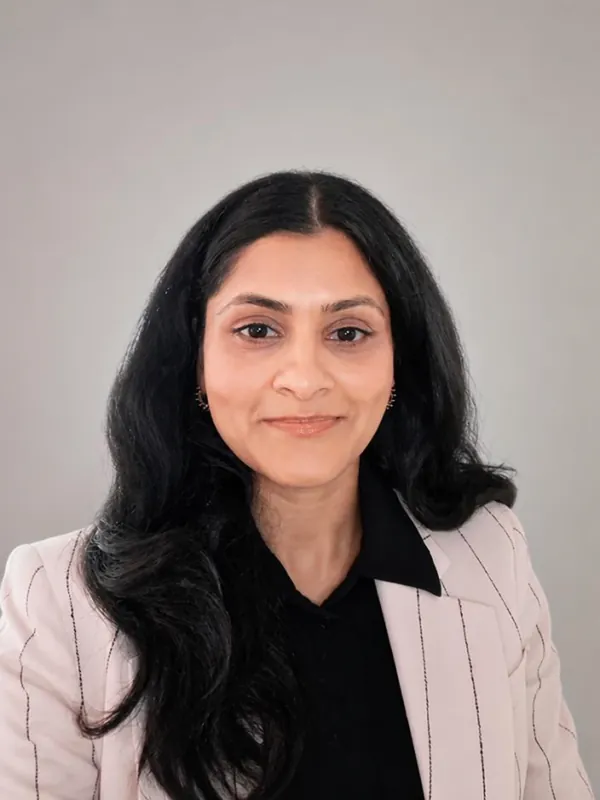
Javeria M
Qualified Teacher | Maths Tutor | GCSE and SEN Support | Clear, Confidence-Building Lessons
Primary Maths Tutor
From £25/hour
DBS Checked • Qualified Teacher (QTS) • SEN Specialist

Christy J
Trainee Primary Teacher | Personalised Maths Tuition with 4+ Years’ Experience
From £20/hour
DBS Checked

Andrew V
PhD Scientist | Clear, Exam-Focused Maths Tuition from KS2 to A-Level
Primary Maths Tutor
From £50/hour
DBS Checked • SEN Specialist

Tom D
Qualified Teacher | Personalised Maths Tuition Backed by 14+ Years in Education
Primary Maths Tutor
From £30/hour
Qualified Teacher (QTS) • SEN Specialist

Komal A
Qualified Teacher | Maths Tutor | Clear Steps & Stronger Confidence
Primary Maths Tutor
From £25/hour
DBS Checked • Qualified Teacher (QTS) • SEN Specialist

Arun D
Senior Mathematics Practitioner | Maths Tutor | Edexcel Examiner
Primary Maths Tutor
From £70/hour
Qualified Teacher (QTS) • Examiner • SEN Specialist

Lavine O
Qualified Primary Teacher | Maths Tutor | 5+ Years Helping Children Thrive
From £35/hour
DBS Checked • Qualified Teacher (QTS)
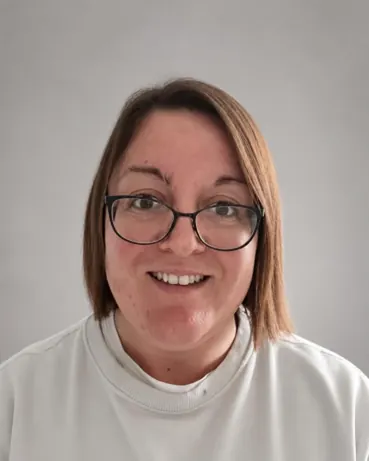
Claire W
Qualified Teacher | Maths Tutor | 12+ Years Making Learning Enjoyable
Primary Maths Tutor
From £20/hour
DBS Checked • Qualified Teacher (QTS) • SEN Specialist

Nick R
Former Headteacher with SEND Expertise | Personalised Maths Support That Builds Confidence
Primary Maths Tutor
From £30/hour
DBS Checked • Qualified Teacher (QTS) • SEN Specialist
Why choose Klasu
At Klasu, we connect students with expert Maths tutors to build understanding and confidence. Whether you're preparing for Maths exams or looking for extra support with your studies, our personalised online lessons help you achieve your goals.
Ace Your Maths Exams
Preparing for exams can be stressful and overwhelming. Klasu is here to help you master your Maths studies and feel confident on exam day.
Whether you're tackling GCSE Maths or A-Level Maths, we have the tools and expertise to help you succeed.
Explore our tuition services
Are you searching for a competent and dedicated Maths tutor for your child or perhaps to enhance your understanding and confidence in the subject? Our expert tutors are here to help you deepen your knowledge, ace exam preparation, and unlock your full potential in Maths. With private lessons online tailored to your schedule, we ensure a flexible and focused approach to learning. Take the first step toward boosting your confidence and improving your Maths grades today.
Finding the right Primary Maths tutor can make all the difference in academic success. Klasu's online tutors specialise in Primary Maths and plan personalised one-to-one lessons around your syllabus and target grade.
Whether you're preparing for Primary Maths exams, need help with homework, or want to deepen your understanding, our tutors provide personalised one-to-one lessons tailored to your learning style and target grade.
Topics covered
- Number and Place Value
- Children learn to read, write, order and compare numbers, understand what each digit represents, and work with increasingly large numbers as they progress through primary school. A secure grasp of place value underpins almost everything else in primary maths.
- Addition and Subtraction
- From early number bonds and mental strategies in KS1 through to formal written methods in KS2, children develop reliable ways to add and subtract whole numbers, decimals and measures. A tutor can help if a child has gaps in earlier methods that are affecting their current work.
- Multiplication and Division
- This includes times tables, related division facts, mental and written calculation methods, and applying multiplication and division to fractions, measures and multi-step problems. The Year 4 multiplication tables check is a relevant milestone for pupils in England.
- Fractions, Decimals and Percentages
- Children move from simple halves and quarters in KS1 to equivalent fractions, mixed numbers, decimal and percentage conversions in upper KS2. These topics are a common source of confusion, and a tutor can use visual representations and step-by-step explanation to help them make sense.
- Measurement, Time and Money
- Pupils work with length, mass, capacity, temperature, time and money throughout primary school, applying number skills in practical contexts. Understanding units, conversions and reading scales are all areas where individual support can help.
- Geometry: Properties of Shape
- Children learn to recognise, describe and classify 2D and 3D shapes, understand angles, symmetry and properties of polygons, and in upper KS2 explore coordinates and geometric reasoning. A tutor can help pupils connect the language of shape to their visual understanding.
- Statistics and Data
- From simple pictograms in KS1 to bar charts, line graphs, pie charts and tables in KS2, children learn to present, interpret and draw conclusions from data. A tutor can support both the mathematical skills and the vocabulary needed to explain findings.
- Reasoning and Problem-Solving
- Across all year groups, children are expected to explain their thinking, spot patterns, justify methods and apply knowledge to unfamiliar problems. These skills go beyond straightforward calculation and are often where children benefit most from one-to-one discussion.
- Mental Arithmetic and Calculation Strategies
- Efficient mental methods, number sense and the ability to choose a suitable approach are important throughout primary maths. A tutor can help a child move beyond relying on counting strategies and develop more flexible ways of working with numbers.
- Word Problems and Mathematical Language
- Many children can complete straightforward calculations but find it harder to decide what a word problem is asking. A tutor can work on reading problems carefully, identifying relevant information and choosing the right operation or method.
How Primary Maths is Assessed in the UK
Primary Maths in England does not follow GCSE-style exam boards such as AQA, Edexcel or OCR. Instead, children follow the National Curriculum mathematics programmes of study, which set out what pupils should know and be able to do by the end of each key stage. Progress is assessed through teacher assessment throughout the year, and in England, Year 6 pupils whose schools take part in statutory arrangements sit KS2 national curriculum assessments (SATs), which include an arithmetic paper and two reasoning papers. The Year 4 multiplication tables check is also a statutory assessment for relevant pupils in England.
At KS2, the assessments are designed to reflect the breadth of the primary maths curriculum, not just calculation. Children who do well tend to have secure number knowledge, can apply methods to unfamiliar problems, and are able to show and explain their working. Gaps in earlier topics such as place value, fractions or times tables can make later work noticeably harder, which is one reason why addressing those gaps sooner rather than later is worth considering.
Tutoring can support a child's progress in several ways. Individual sessions give a pupil the opportunity to ask questions they might not feel comfortable raising in class, revisit areas where understanding is less secure, and practise the kind of multi-step reasoning that appears in KS2 assessments. Preparation for assessments is most effective when it focuses on genuine understanding rather than repeated drilling, so that children approach their work with greater confidence rather than simply memorising procedures.
Top study tips
- Make sure number facts are secure before moving on. Reliable recall of addition, subtraction and multiplication facts makes everything from fractions to word problems considerably easier.
- Practise explaining answers out loud. Being able to describe how an answer was reached is a skill in itself, and it often reveals gaps in understanding that written work alone does not show.
- Work through word problems carefully rather than quickly. Reading the question more than once, identifying what is being asked and checking whether the answer is reasonable are all habits worth developing.
- Connect different areas of maths rather than treating each topic in isolation. Fractions, decimals and percentages are closely related, and understanding those connections makes each one easier to handle.
- Review recent school work regularly rather than leaving revision until just before an assessment. Short, consistent practice over several weeks tends to be more effective than intensive last-minute preparation.
Why Consider a Primary Maths Tutor?
- Individual attention is hard to replicate in a classroom
- In a class of thirty children, there is limited time for a teacher to check that every pupil has genuinely understood a concept before moving on. One-to-one support allows a tutor to focus entirely on your child, notice where understanding is less secure and explain things in a different way if the first approach does not click.
- Gaps in earlier knowledge can be addressed directly
- Primary maths builds on itself. A child who is uncertain about place value may struggle with written calculation, and a child who is not confident with multiplication facts may find fractions and percentages harder than they need to be. A tutor can identify where earlier knowledge needs revisiting and work through it without the pressure of keeping pace with a whole class.
- Homework and school topics can become less stressful
- When a child finds maths difficult, homework can become a source of frustration for the whole family. A tutor who understands the methods being used in school can help a child make sense of their classwork, so that homework feels more manageable and less of a battle.
- Tuition is not only for children who are behind
- Some children are progressing well but would benefit from deeper reasoning, more challenging problems or support consolidating what they already know. Tuition can offer greater stretch and variety for a pupil who is ready for it, not just catch-up for those finding things difficult.
- Preparation for KS2 assessments and secondary school
- For Year 6 pupils, the transition to secondary school and KS2 assessments both benefit from strong foundations in number, reasoning and problem-solving. A tutor can help a child feel more prepared and approach that transition with a clearer sense of what they know and what they can do.
What to Look for in a Primary Maths Tutor
- Experience with primary-aged children
- Teaching younger learners requires a different approach from tutoring older students. Look for a tutor who has worked with children of a similar age to your child and understands how to keep them engaged, explain ideas in accessible language and adjust the pace of a lesson appropriately.
- Familiarity with the curriculum and your child's year group
- A good primary maths tutor should be comfortable with the topics covered across KS1 and KS2 and understand how the curriculum progresses from one year to the next. It is also helpful if they are willing to work with your child's current school topics rather than following a separate programme in isolation.
- The ability to explain ideas in more than one way
- If one explanation does not land, a tutor who can approach the same concept from a different angle, use a visual representation or connect it to something the child already understands is far more useful than one who simply repeats the same method more slowly.
- Clear communication with you as a parent
- You should have a reasonable sense of what your child is working on and how they are getting on. A tutor who is willing to share brief feedback after sessions and discuss any concerns you raise can help you feel involved in your child's progress rather than left in the dark.
- A calm and patient manner
- Children who have become hesitant or frustrated around maths need a tutor who responds to mistakes constructively and creates a low-pressure environment for asking questions. How a tutor responds when a child gets something wrong matters just as much as their subject knowledge.
Career paths
Strong mathematical foundations built during primary school carry through into secondary education and well beyond. Children who develop secure number skills, clear reasoning and confidence with problem-solving are better placed across a wide range of future study and work.
- Science, Technology, Engineering and Mathematics
- A solid grounding in primary maths is the starting point for GCSE and A-Level Maths, Physics, Chemistry and Computing, all of which lead into university courses and careers in engineering, data science, medicine, research and technology.
- Finance and Economics
- Subjects such as A-Level Economics, Business Studies and Accounting build directly on number skills, percentages, ratios and data interpretation that are first introduced at primary level. Careers in banking, financial analysis and accounting all require this foundation.
- Architecture and Design
- Spatial reasoning, measurement and geometry developed during primary school feed into design and technology, art, architecture and engineering. Children who are comfortable with shape, proportion and measurement have a head start in these creative and technical fields.
- Medicine and Healthcare
- Medical, nursing and healthcare courses require strong numeracy for drug calculations, data interpretation and statistical reasoning. The number confidence developed in primary school contributes to the mathematical literacy these professions depend on.
- Teaching and Education
- Primary school teachers need a thorough understanding of the mathematics they teach, including the reasoning behind methods rather than just the procedures. Children who develop genuine mathematical understanding at primary level are well placed to explain and share that knowledge in the future.
- Everyday Numeracy and Independent Life Skills
- Beyond formal careers, confident numeracy supports budgeting, understanding data in the news, making informed decisions and navigating everyday situations involving numbers. The reasoning habits developed in primary maths have a practical value that extends throughout life.