KS2 Maths Tutors Online
KS2 Maths tutor rates: £15–£70 per hour
KS2 Maths covers a lot of ground, from building secure number knowledge in Year 3 to tackling long division, fractions and early algebra by Year 6. For many children, the work starts to feel noticeably harder as each year builds on the last, and small gaps can quietly make new topics more difficult than they need to be. Whether your child needs some extra support with a particular area, wants to feel more confident before assessments, or is ready for more demanding problems, working with an online KS2 Maths tutor gives them the space to ask questions, work through ideas properly and make…
Top Maths tutors

Irina M
Aerospace Engineer | Expert Maths Tuition Backed by 10 Years’ Experience
KS2 Maths Tutor
From £45/hour
★ 5.0/5 from 1 review

Michelle N
Former Headteacher | Expert Maths Tuition from an Examiner with 23+ Years’ Experience
KS2 Maths Tutor
From £50/hour
DBS Checked • Qualified Teacher (QTS) • Examiner • SEN Specialist

Arun D
Senior Mathematics Practitioner | Maths Tutor | Edexcel Examiner
KS2 Maths Tutor
From £70/hour
Qualified Teacher (QTS) • Examiner • SEN Specialist

Charmian D
14+ Years’ Experience | Personalised Maths Tuition for Every Learner
KS2 Maths Tutor
From £35/hour
★ 5.0/5 from 1 review
SEN Specialist

Rob G
Former Teacher | 15,000+ Hours of Maths Tuition & 18+ Years’ Experience
KS2 Maths Tutor
From £40/hour
★ 5.0/5 from 1 review
DBS Checked • SEN Specialist

Christy J
Trainee Primary Teacher | Personalised Maths Tuition with 4+ Years’ Experience
KS2 Maths Tutor
From £20/hour
DBS Checked

Andrew V
PhD Scientist | Clear, Exam-Focused Maths Tuition from KS2 to A-Level
From £50/hour
DBS Checked • SEN Specialist

Tom D
Qualified Teacher | Personalised Maths Tuition Backed by 14+ Years in Education
KS2 Maths Tutor
From £30/hour
Qualified Teacher (QTS) • SEN Specialist

Paul E
Qualified Teacher | Maths Tutor | 10+ Years Building Confidence
KS2 Maths Tutor
From £40/hour
DBS Checked • Qualified Teacher (QTS) • SEN Specialist

Komal A
Qualified Teacher | Maths Tutor | Clear Steps & Stronger Confidence
KS2 Maths Tutor
From £25/hour
DBS Checked • Qualified Teacher (QTS) • SEN Specialist
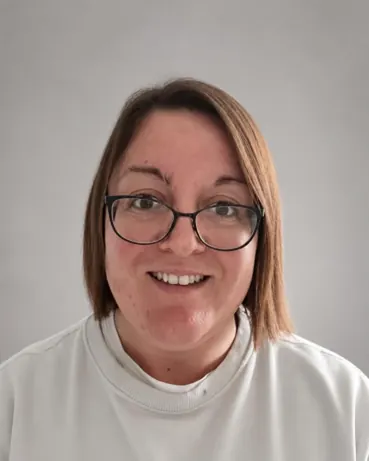
Claire W
Qualified Teacher | Maths Tutor | 12+ Years Making Learning Enjoyable
KS2 Maths Tutor
From £20/hour
DBS Checked • Qualified Teacher (QTS) • SEN Specialist
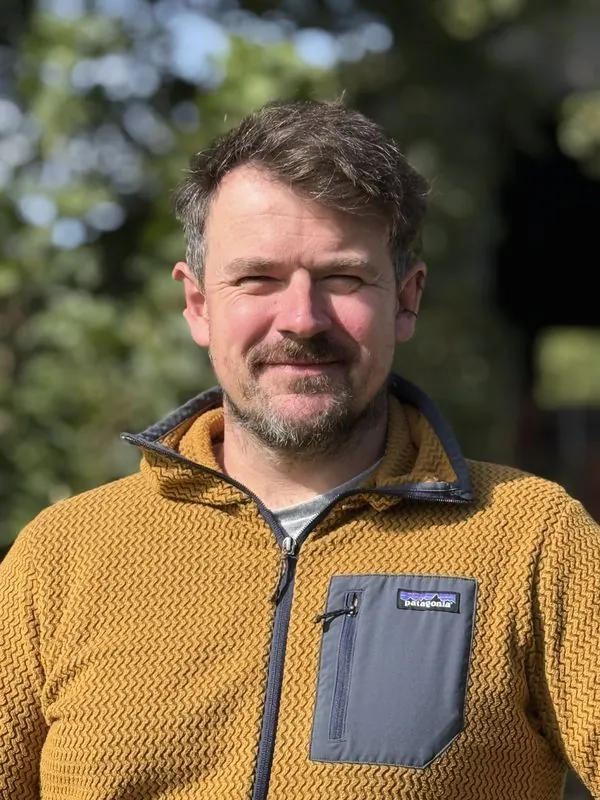
Nick R
Former Headteacher with SEND Expertise | Personalised Maths Support That Builds Confidence
KS2 Maths Tutor
From £30/hour
DBS Checked • Qualified Teacher (QTS) • SEN Specialist
Why choose Klasu
At Klasu, we connect students with expert Maths tutors to build understanding and confidence. Whether you're preparing for Maths exams or looking for extra support with your studies, our personalised online lessons help you achieve your goals.
Ace Your Maths Exams
Preparing for exams can be stressful and overwhelming. Klasu is here to help you master your Maths studies and feel confident on exam day.
Whether you're tackling GCSE Maths or A-Level Maths, we have the tools and expertise to help you succeed.
Explore our tuition services
Are you searching for a competent and dedicated Maths tutor for your child or perhaps to enhance your understanding and confidence in the subject? Our expert tutors are here to help you deepen your knowledge, ace exam preparation, and unlock your full potential in Maths. With private lessons online tailored to your schedule, we ensure a flexible and focused approach to learning. Take the first step toward boosting your confidence and improving your Maths grades today.
Finding the right KS2 Maths tutor can make all the difference in academic success. Klasu's online tutors specialise in KS2 Maths and plan personalised one-to-one lessons around your syllabus and target grade.
Whether you're preparing for KS2 Maths exams, need help with homework, or want to deepen your understanding, our tutors provide personalised one-to-one lessons tailored to your learning style and target grade.
Exam boards we cover
- National Curriculum (England)
- KS2 Maths in England follows the national curriculum rather than an exam board specification. The curriculum sets out expectations for mathematical fluency, reasoning and problem-solving across Years 3 to 6, with schools having some flexibility over when content is introduced within the key stage.
Topics covered
- Place Value and Number
- From three-digit numbers in Year 3 through to numbers up to ten million in Year 6, pupils develop a secure understanding of what each digit represents, how to compare and order numbers, and how to round and estimate with increasing confidence.
- Mental and Written Calculation
- Pupils build a range of efficient mental strategies alongside formal written methods for addition, subtraction, multiplication and division. Written methods become more demanding across KS2, culminating in long multiplication and long division in Year 6.
- Times Tables and Multiplication Facts
- Secure recall of multiplication facts through 12 times 12 is a key focus across lower KS2, supporting not just arithmetic but also fractions, area, ratio and written calculation. Year 4 pupils in relevant state schools take the statutory multiplication tables check.
- Fractions, Decimals and Percentages
- These closely connected topics develop steadily across KS2. Pupils move from recognising simple fractions to comparing, ordering, adding, subtracting, multiplying and dividing them, while also building understanding of how fractions, decimals and percentages relate to one another.
- Ratio and Proportion
- Introduced in upper KS2, ratio and proportion ask pupils to think about how quantities relate to each other. This can feel like a significant step, particularly when combined with more complex word problems.
- Early Algebra
- Year 6 pupils begin working with simple formulae, missing number problems and introductory equations. This content bridges KS2 and secondary Maths and can catch pupils off guard if the underlying number knowledge is not secure.
- Measurement, Geometry and Statistics
- Across KS2, pupils work with units of measurement, perimeter, area, volume, angles, properties of shapes, coordinates, reflection, translation, charts, graphs and calculating the mean. These topics often appear in reasoning questions and benefit from careful explanation.
- Arithmetic Fluency
- Arithmetic covers the full range of calculation skills: mental methods, written methods, fractions, decimals, percentages and the order of operations. In Year 6 assessments, the arithmetic paper tests accuracy under timed conditions across a wide range of question types.
- Mathematical Reasoning
- Reasoning asks pupils to apply what they know, interpret information, explain their thinking and solve problems where the method is not given to them. Many pupils find reasoning harder than routine calculation, even when their arithmetic is strong.
- Multi-Step Word Problems
- Word problems require pupils to read carefully, identify the relevant information, decide which operations to use and carry out several steps accurately. They become progressively more demanding across KS2 and are a common source of difficulty.
How KS2 Maths Is Assessed
KS2 Maths does not use the kind of graded marking associated with GCSEs or A-levels. In England, Year 6 pupils in relevant state schools sit national curriculum assessments at the end of KS2, commonly referred to as SATs. The Maths assessment currently consists of three papers: one arithmetic paper focused on calculation, and two reasoning papers that ask pupils to apply their knowledge, interpret information and solve problems. Results are reported as scaled scores, and pupils may also be assessed as working at greater depth within the expected standard.
The arithmetic paper rewards accuracy and a secure grasp of written and mental calculation methods. The reasoning papers are more varied and require pupils to think carefully about which approach to take, show their working where asked and check that their answers make sense in context. A pupil who performs well in routine calculation does not always find the reasoning papers straightforward, and the reverse can also be true. Both areas benefit from focused and consistent practice.
It is worth remembering that KS2 Maths tutoring is not only relevant in the months before Year 6 assessments. Work done in Years 3, 4 and 5 to strengthen number knowledge, times tables, fractions and written methods can make a real difference to how well a pupil copes with the more demanding content they encounter later. Building understanding gradually across the key stage tends to be more effective than trying to address everything at once.
Top study tips
- Work on times tables regularly and in short sessions rather than trying to memorise everything at once. Connecting multiplication facts with related division facts helps both recall and understanding.
- When practising written methods, take care with digit alignment and place-value placeholders. Many marks are lost not through misunderstanding but through small errors in layout.
- Read word problems more than once before attempting them. Identifying what the question is actually asking, and what information is relevant, is often the hardest part.
- Practise explaining answers out loud, not just writing them down. Being able to say why an answer is correct, or how a method works, strengthens reasoning and helps identify gaps.
- After completing practice questions, check answers by working backwards or using an inverse operation where possible. Developing the habit of checking helps avoid avoidable mistakes in assessments.
Why Get a KS2 Maths Tutor?
- Individual attention makes a difference
- In a busy classroom, there is rarely enough time for a teacher to sit with each pupil and work through a difficulty in detail. A tutor can focus entirely on your child, notice where understanding is less secure and take the time to explain things in a way that actually makes sense to them.
- Earlier gaps can quietly cause later problems
- KS2 Maths builds steadily on earlier knowledge. Shaky place-value understanding, uncertain times tables or confusion about fractions can make new topics harder than they need to be. A tutor can identify where the difficulty actually starts, rather than just working on the surface of the current topic.
- Reasoning takes practice that classroom time does not always allow
- Many pupils are reasonably confident with routine calculations but find it much harder when a question does not tell them which method to use. Developing the ability to read a problem carefully, choose an approach and explain a conclusion takes time and guided practice.
- Support can be matched to the pupil's current needs
- Not every child needs the same kind of help. Some need to revisit earlier content before moving forward. Others are keeping up but want to feel more secure before assessments. Some are already doing well and would benefit from more challenging problems. A good tutor can adjust what they cover and how they approach it.
- Tuition is not only for pupils who are struggling
- Plenty of children who are managing well in school still benefit from working with a tutor. Deeper reasoning problems, unfamiliar question types and the chance to explore mathematics more independently can be just as valuable as catching up, particularly for pupils who grasp new ideas quickly.
What to Look for in a KS2 Maths Tutor
- Familiarity with the KS2 curriculum
- KS2 Maths has its own distinct content and expectations across Years 3 to 6. A tutor who knows the curriculum well will understand what pupils are expected to cover in each year, how topics develop across the key stage and where common difficulties tend to arise.
- Experience with the relevant age group
- Working with primary-age pupils requires a different approach from teaching older students. Patience, the ability to explain ideas in accessible ways and an understanding of how children at this stage think about mathematics all matter when choosing a tutor for a KS2 pupil.
- Ability to cover both arithmetic and reasoning
- A good KS2 Maths tutor should be comfortable supporting both the calculation side of mathematics and the reasoning and problem-solving side. These are distinct skills and pupils often need different kinds of support for each.
- Clear communication and a calm approach
- Children who are already finding Maths difficult can become more anxious if they feel rushed or judged. A tutor who explains things clearly, responds to confusion without frustration and gives a pupil time to think can make a significant difference to how a child feels about the subject.
- Willingness to follow what the child is working on at school
- The most useful tuition tends to connect with what a pupil is actually doing in class. A tutor who is willing to work from the topics currently being studied, take account of feedback shared by the family and adjust their approach based on the child's progress is likely to be more helpful than one who follows a fixed programme regardless of circumstances.
Career paths
Strong mathematical foundations built during KS2 do not just help with the next school year. They support a much wider range of future study and work. Pupils who develop genuine confidence with numbers, problem-solving and logical thinking during primary school tend to find secondary Maths and beyond considerably more manageable.
- Science and Engineering
- Physics, chemistry, biology and all branches of engineering rely on mathematical understanding. Secure arithmetic, a grasp of proportion and the ability to work through multi-step problems are all relevant from secondary school onwards.
- Technology and Computing
- Computer science, data analysis and software development all draw on mathematical thinking, including logical reasoning, pattern recognition and working systematically through problems.
- Finance and Economics
- Accountancy, banking, economics and business all require confident numerical reasoning. Understanding fractions, percentages and proportion at KS2 level provides an early foundation for these fields.
- Medicine and Healthcare
- Careers in medicine, pharmacy, nursing and related sciences involve working with data, measurements and calculations. A secure understanding of number and proportion supports this kind of work.
- Architecture and Design
- Spatial reasoning, measurement and an understanding of geometry all connect with design-based careers. These ideas begin to develop during KS2 and continue to be relevant in professional contexts.
- Further Academic Study
- Many university courses across a wide range of subjects expect students to be comfortable with data, statistics and quantitative reasoning. The mathematical habits of mind developed during KS2 contribute to this kind of readiness over time.