GCSE English Literature Tutors Online
GCSE English Literature tutor rates: £15–£100 per hour
GCSE English Literature is a demanding qualification that asks students to do far more than retell a story. Across every exam board, learners are expected to analyse a writer's choices, integrate contextual understanding and construct well-evidenced arguments under timed conditions. Many students find that they understand the texts well but struggle to translate that understanding into marks, particularly when it comes to poetry, unseen analysis or closed-book examinations. A tutor who knows your child's exact specification, set texts and assessment objectives can help identify where marks…
Top English Literature tutors

Helena A
Qualified English Teacher & Former Assistant Headteacher | GCSE & iGCSE English Literature Specialist
From £72/hour
★ 5.0/5 from 1 review
DBS Checked • Qualified Teacher (QTS) • SEN Specialist

Jane B
Qualified English English Literature Teacher | 22 Years Helping GCSE, IGCSE & SEND Learners Thrive
From £45/hour
DBS Checked • Qualified Teacher (QTS) • Examiner • SEN Specialist

Marta C
TESOL Master’s Graduate | Expert English Literature Tuition with 18+ Years’ Experience
GCSE English Literature Tutor
From £43/hour

Michelle N
Former Headteacher | Expert English Literature Tuition from an Examiner with 23+ Years’ Experience
GCSE English Literature Tutor
From £67/hour
DBS Checked • Qualified Teacher (QTS) • Examiner • SEN Specialist

Tara M
5+ Years’ Experience | English Literature Tutor | Confidence & Stronger Exam Skills
GCSE English Literature Tutor
From £40/hour
DBS Checked • SEN Specialist

Alexander C
Experienced English Literature Tutor | English PhD Researcher with Nearly 300 Tutoring Hours
GCSE English Literature Tutor
From £50/hour
DBS Checked • SEN Specialist

Marcus S
Experienced English Literature Tutor | Creative Lessons That Build Confidence and Communication
GCSE English Literature Tutor
From £30/hour
DBS Checked

Jay G
Qualified English Literature Teacher | 6+ Years Helping Students Reach Their Potential
GCSE English Literature Tutor
From £15/hour
DBS Checked • Qualified Teacher (QTS) • SEN Specialist

Beatrice A
Patient English Literature Tutor | Visual Lessons and SEN-Aware Support
GCSE English Literature Tutor
From £20/hour
SEN Specialist

Dara M
Supportive English Literature Tutor | Building Confidence and Closing Learning Gaps
GCSE English Literature Tutor
From £45/hour
DBS Checked

Anya A
Patient Tutor | English Literature Support | 3+ Years’ Experience
GCSE English Literature Tutor
From £35/hour
DBS Checked
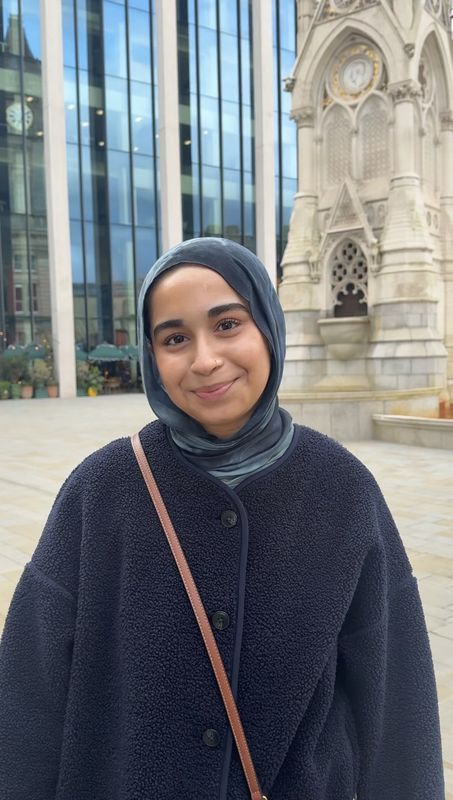
Farhanah A
Qualified Teacher | English Literature Tutor | Calm and Personalised Support
GCSE English Literature Tutor
From £30/hour
DBS Checked • Qualified Teacher (QTS) • SEN Specialist
Why choose Klasu
At Klasu, we connect students with expert English Literature tutors to build understanding and confidence. Whether you're preparing for English Literature exams or looking for extra support with your studies, our personalised online lessons help you achieve your goals.
Ace Your English Literature Exams
Preparing for exams can be stressful and overwhelming. Klasu is here to help you master your English Literature studies and feel confident on exam day.
Whether you're tackling GCSE English Literature or A-Level English Literature, we have the tools and expertise to help you succeed.
Explore our tuition services
Are you searching for a competent and dedicated English Literature tutor for your child or perhaps to enhance your understanding and confidence in the subject? Our expert tutors are here to help you deepen your knowledge, ace exam preparation, and unlock your full potential in English Literature. With private lessons online tailored to your schedule, we ensure a flexible and focused approach to learning. Take the first step toward boosting your confidence and improving your English Literature grades today.
Finding the right GCSE English Literature tutor can make all the difference in academic success. Klasu's online tutors specialise in GCSE English Literature and plan personalised one-to-one lessons around your syllabus and target grade.
Whether you're preparing for GCSE English Literature exams, need help with homework, or want to deepen your understanding, our tutors provide personalised one-to-one lessons tailored to your learning style and target grade.
Exam boards we cover
- AQA
- AQA GCSE English Literature (specification code 8702) is one of the most widely taught specifications in England. It is assessed across two written papers, with Paper 2 carrying the greater weighting at 60 per cent of the qualification.
- Edexcel
- The Pearson Edexcel GCSE English Literature (specification code 1ET0) is assessed through two equally weighted written papers, each worth 50 per cent of the qualification. The structure and mark allocation differ from AQA, so board-specific preparation matters.
- OCR
- OCR GCSE English Literature (specification code J352) organises its content differently from AQA and Pearson. Both written components carry equal weight, and the grouping of texts across papers does not follow the same pattern as other English boards.
- Eduqas
- The Eduqas GCSE English Literature (qualification code C720QS) is offered in England and groups its content across two components, with the longer component carrying 60 per cent of the marks. Learners and tutors should confirm which poetry anthology applies to the relevant examination year, as the anthology is changing for cohorts assessed from 2027 onwards.
- WJEC
- WJEC offers GCSE English Literature qualifications for learners in Wales. Welsh learners should confirm which qualification applies to them, as the legacy standalone GCSE English Literature is being replaced by new integrated qualifications for cohorts beginning from September 2025.
- CCEA
- CCEA GCSE English Literature (subject code 5110) is the qualification for learners in Northern Ireland. It is unitised and includes a controlled assessment component, which distinguishes it from the examination-only qualifications offered in England.
Topics covered
- Shakespeare
- Every GCSE English Literature specification requires the study of at least one Shakespeare play. Students learn to analyse dramatic language, structure and stagecraft, and to place the play within its historical and social context. Common set texts include Macbeth, Romeo and Juliet, The Merchant of Venice and Much Ado About Nothing, though the exact play depends on the school's choice.
- 19th-Century Novel
- Students study a prose text written during the 19th century, exploring how writers of the period used narrative voice, character and setting to reflect the concerns of their time. Common texts include A Christmas Carol, Great Expectations, Jekyll and Hyde and Jane Eyre. Understanding the historical and literary context of these novels is an important part of the assessment.
- Post-1914 Modern Text
- Depending on the exam board and the school's chosen route, students study either a modern play or a modern novel published after 1914. Frequently taught texts include An Inspector Calls, Lord of the Flies and Animal Farm. Students are expected to analyse the writer's methods and consider how the text reflects its social and historical moment.
- Poetry Anthology
- Most specifications require the study of a set group of poems from an anthology. Students compare poems thematically and analytically, examining how different poets use language, form and structure to convey meaning. Common clusters include AQA's Power and Conflict and Love and Relationships groups, though the relevant anthology or cluster depends on the board and the school's choice.
- Unseen Poetry
- Students are asked to respond to one or more poems they have not studied before. This section tests close reading skills, the ability to identify and comment on poetic techniques, and the capacity to write a structured analytical response without prior preparation. Many students find this the most challenging part of the examination.
- Language Analysis and Writer's Methods
- Across all texts and papers, students are expected to identify and analyse the specific choices a writer makes, including word choice, imagery, tone, sentence structure and form. This goes well beyond naming techniques. Examiners want to see students explain what effect a method creates and why it matters to the text as a whole.
- Context and Its Role in Analysis
- Assessment objective 3 requires students to show understanding of how texts relate to their contexts. This includes historical, social, cultural and literary background. A common mistake is to include context as a separate paragraph rather than weaving it into the analysis of the writer's choices.
- Essay Structure and Planning
- Students need to construct focused, well-organised responses within strict time limits. This includes writing a clear thesis, selecting relevant evidence, developing analytical points and maintaining a consistent argument throughout. Essay planning under timed conditions is a skill that improves with structured practice.
- Comparison Skills
- Poetry questions on most specifications require students to compare two or more poems throughout their response rather than discussing each poem separately. Developing the ability to move fluidly between texts, identifying similarities and differences in methods and meaning, is an important skill that many students find difficult to do naturally.
- Quotation and Textual Evidence
- All GCSE English Literature specifications are closed book in England, which means students must recall quotations accurately during the examination. Effective revision involves selecting short, versatile quotations and practising how to embed them within analytical sentences. Invented or inaccurate quotations can undermine an otherwise strong response.
Understanding GCSE English Literature Grades
In England, GCSE English Literature is graded on a scale from 9 to 1, with 9 being the highest grade available. A grade 4 is widely described as a standard pass and a grade 5 as a strong pass, though individual sixth forms, colleges and employers may set their own entry requirements. It is worth checking what grade a specific post-16 course or institution expects, as this varies. In Northern Ireland, the CCEA qualification is graded A* to G, and in Wales, the new integrated qualifications use different grade structures depending on whether a learner is taking the Single or Double Award.
Reaching the higher grades in GCSE English Literature requires more than a thorough knowledge of the texts. Examiners at the top end of the mark scheme are looking for responses that develop a convincing, well-supported interpretation, analyse the writer's methods with precision and integrate contextual understanding naturally rather than as an afterthought. Students who achieve grade 7, 8 or 9 typically write with a clear sense of argument, select their evidence carefully and show genuine engagement with the way a text is constructed.
A tutor can help by working through the mark scheme for the learner's specific board and identifying where responses are falling short. This might involve improving the quality of analysis rather than increasing its quantity, developing a more secure approach to essay planning, or building the skills needed for unseen poetry. Progress in English Literature often becomes visible once a student understands what the assessment objectives are actually asking for.
Top study tips
- Learn a small number of short, flexible quotations for each text rather than attempting to memorise long passages. A precisely chosen two or three words, closely analysed, will serve you better than a lengthy quote that is only loosely connected to your argument.
- Practise writing under timed conditions using past papers from your own exam board. Timing varies between boards and between sections, so work out how long you have for each question and build the habit of sticking to it.
- When writing about a writer's methods, always follow the identification of a technique with an explanation of the effect it creates and why that effect is significant. Naming a metaphor without explaining what it does will not score highly.
- For poetry comparison questions, aim to move between the two poems throughout your response rather than writing about each one in turn. Sustained comparison, even in brief, shows the examiner that you are engaging with both texts simultaneously.
- In the weeks before the examination, focus revision on the areas the mark scheme rewards most heavily for your specific board. Read the published mark schemes and examiner reports for your qualification, as these explain clearly what distinguishes a strong response from an average one.
Why Consider a GCSE English Literature Tutor?
- Understanding the texts is not the same as scoring well
- Many students who follow the story closely and enjoy the texts still receive disappointing marks. GCSE English Literature rewards a specific set of analytical skills, and a tutor can help a student understand exactly what the examiner is looking for and how to demonstrate it clearly in a written response.
- Board-specific preparation makes a real difference
- The paper structures, question types, mark allocations and assessment objective weightings differ between AQA, Pearson Edexcel, OCR, Eduqas, WJEC and CCEA. A tutor who knows your child's specific qualification can focus preparation on the right texts, the right question formats and the right skills, rather than applying a generic approach that may not match the actual examination.
- Poetry and unseen analysis are skills that can be developed
- Many students feel uncertain about poetry, particularly unseen poems they have not encountered before. A tutor can teach a methodical approach to reading and responding to unfamiliar texts, building the kind of analytical confidence that comes from practising the skill rather than simply worrying about it.
- Closed-book examinations require structured revision
- Because most GCSE English Literature papers in England are closed book, students need a reliable strategy for selecting and retaining quotations. A tutor can help identify the most useful evidence for each text and practise embedding it accurately within analytical writing, so that revision is purposeful rather than overwhelming.
- Support can be matched to where the learner actually is
- Tutoring is not only for students who are struggling. Some learners want to move from a grade 6 to a grade 8, to feel more secure with a particular text, or to prepare thoroughly for a resit. A tutor can focus on the specific areas where additional work will have the most impact, whether that is essay planning, comparison technique or exam timing.
What to Look for in a GCSE English Literature Tutor
- Knowledge of the learner's exact specification
- The most important starting point is finding a tutor who is familiar with the specific awarding organisation, the paper structure and the set texts your child is studying. A tutor with strong literary knowledge but limited familiarity with your child's board may give advice that does not match the actual mark scheme.
- Ability to mark against the correct assessment objectives
- A good tutor will assess your child's written work using the assessment criteria for their specific qualification rather than applying a general impression of quality. This means understanding how AO1, AO2, AO3 and AO4 are weighted across the different questions on your child's papers.
- Clear and constructive written feedback
- Progress in English Literature depends on understanding why a response is not yet scoring as highly as it could. Look for a tutor who gives specific, actionable feedback on each piece of writing rather than general encouragement, and who can explain what a stronger response would include.
- Experience with poetry and unseen analysis
- Poetry is a component of every GCSE English Literature specification, and unseen analysis appears on most papers. A tutor should be able to teach both the anthology poems and the skills needed for unseen responses, including how to approach comparison and how to structure a timed analytical response.
- A realistic and honest approach to progress
- A trustworthy tutor will give an honest assessment of where your child currently is and what is realistically achievable given the time available, rather than making promises about specific grades. Look for someone who sets clear goals, tracks progress against the mark scheme and adjusts their approach as the learner develops.
Career paths
A strong grade in GCSE English Literature is often a requirement or a useful foundation for a range of A-level subjects and future study paths. Beyond the immediate qualification, the skills it develops, including close reading, analytical writing and the ability to construct a well-evidenced argument, are valued across a wide range of disciplines and careers.
- A-Level English Literature or Language and Literature
- GCSE English Literature is typically expected or strongly recommended for students wishing to study English at A-level. A-level English Literature deepens the analytical and comparative skills developed at GCSE and is a common route towards university study in English, Creative Writing, Journalism and related subjects.
- Law
- Law degrees and legal careers require the ability to read complex texts carefully, construct precise arguments and communicate clearly in writing. Strong English Literature skills at GCSE and A-level provide a useful foundation for students considering this path.
- Journalism and Media
- Careers in journalism, broadcasting, publishing and media rely on strong written communication, critical thinking and the ability to engage with a wide range of texts and ideas. A background in English Literature supports these skills from an early stage.
- Teaching and Education
- Students who go on to train as teachers, particularly in English or humanities subjects, will find that the analytical and communication skills developed through GCSE and A-level English Literature are directly relevant to their professional work.
- History, Philosophy and Social Sciences
- Many humanities and social science degrees expect students to read and interpret complex texts, assess evidence and write analytically. The skills practised in GCSE English Literature transfer well to these disciplines at A-level and beyond.
- Creative Industries
- Students interested in writing, screenwriting, theatre, publishing or the broader creative sector will find that a secure grounding in literary analysis, developed through GCSE English Literature, informs and strengthens their own creative practice as well as their understanding of the industry.